Spider Veins
Spider Veins Treatment in Denver
Spider Veins Summary
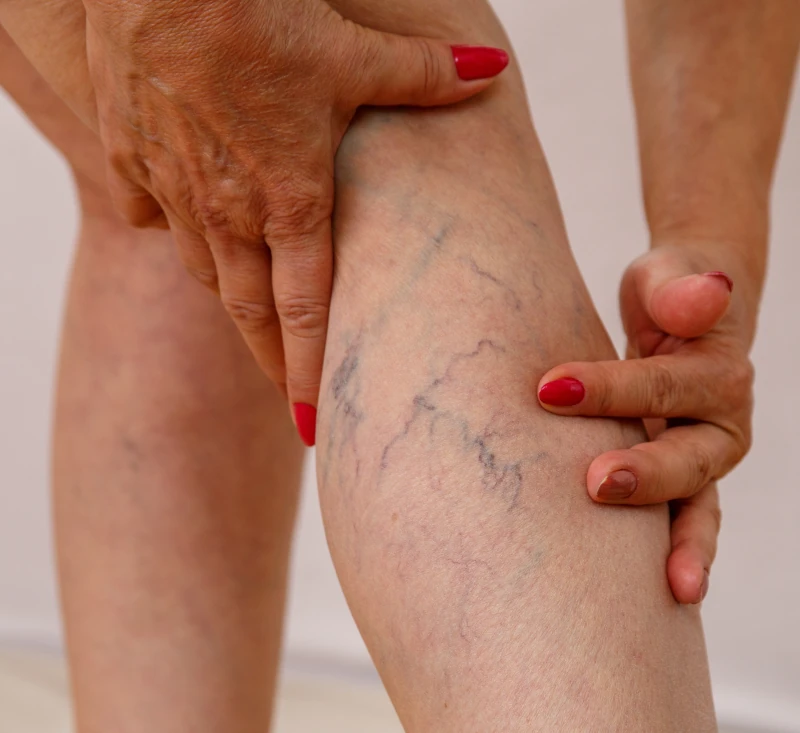
What Are Spider Veins?
While they are most commonly seen on the legs and face, spider veins can develop anywhere on the body. Spider veins develop when tiny valves inside superficial veins weaken or fail, allowing blood to pool and veins to enlarge.
What Are the Causes of Spider Veins?
Family History
Spider veins, similar to varicose veins, have a strong family history. If one of your parents are affected by vein conditions, your chances of developing vein problems are roughly 40%.
Female and Hormonal Changes
Women who have been exposed to hormonal changes throughout their lifetime, including pregnancy, menopause, and oral contraceptives are more likely to develop spider veins.
Age
We lose tissue elasticity as we age. Not only does this lead to more broken blood vessels, the loss of skin elasticity and subcutaneous fat further exacerbate the look of spider veins.
Underlying Venous Insufficiency
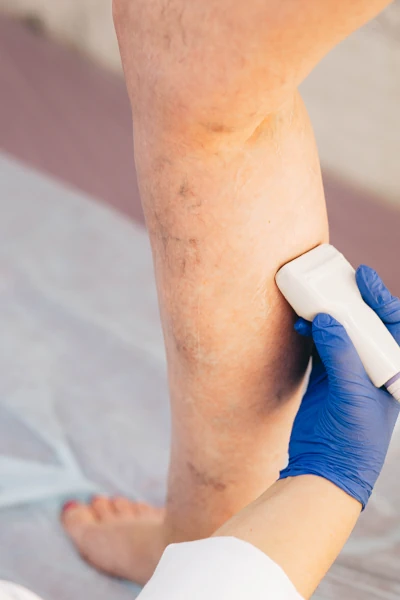
Spider veins may be the "tip of the iceberg" and signs of more serious vein problems called chronic venous insufficiency. Chronic venous insufficiency is caused by weakened valves in your veins and will require more thorough ultrasound exam and medical evaluation.
What Are the Symptoms of Spider Veins?
How to Treat Spider Veins?
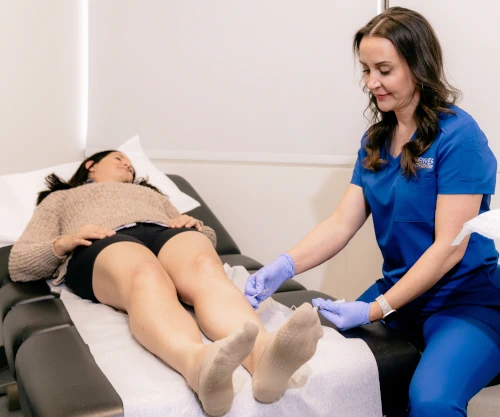
After the underlying problem is either ruled out or treated, spider veins are best treated with sclerotherapy. Sclerotherapy is done by Dr. Le and his nurse practitioner based on the complexity and extent of the spider veins.