Varicose Veins
Summary
What Are Varicose Veins?
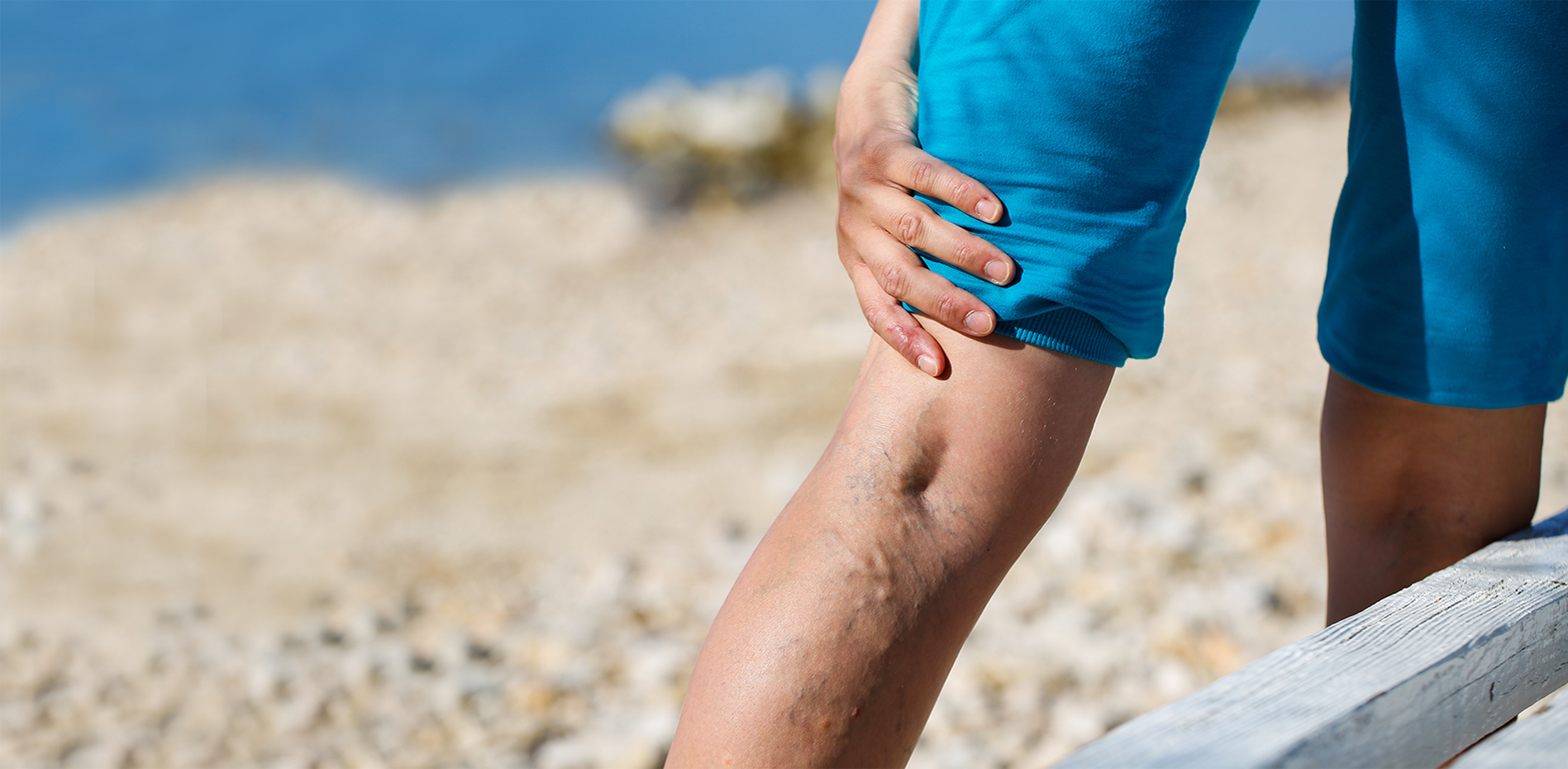
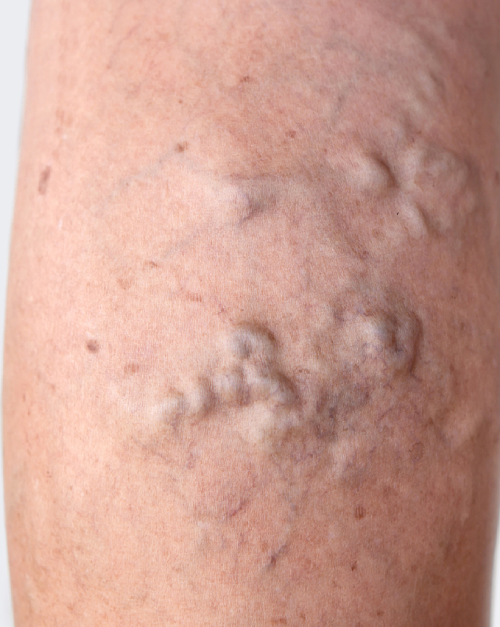
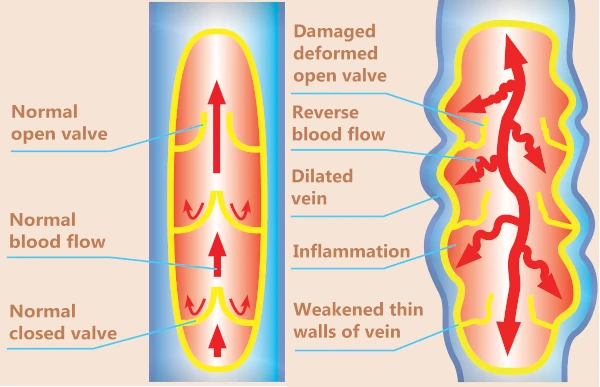
Your veins are made out of a smooth muscle tube and multiple 1-way check valves within the tube to prevent blood backflow. Venous insufficiency happens when these check valves fail. The valves can fail for a number of reasons (see below) and put back pressure on the rest of the veins. Over time, these veins dilate and become varicose veins.
What are the Symptoms of Varicose Veins
- Aching and heaviness in legs
- Fatigue of the legs
- Burning or itching over the varicose veins
- Swelling of the legs
- Skin discoloration and inflammation
- Hard lumps over the varicose veins (clotting of the veins)
- Bleeding of the varicose veins
- Open sores and ulcers in the skin, usually around the ankle areas
What are the Causes of Varicose Veins?
Family History
Varicose veins has a significant hereditary component. If you have one parent with varicose veins, your chance of having them is approximately 40%. If both of your parents have varicose veins, you chances of getting them are nearly 90%!
Prolonged Standing
In developed countries, people who need to stand and walk for long hours (nurses, teachers, factory workers) have higher tendencies to develop varicose veins. While it is true that prolonged standing does subject one's legs to more gravity and venous pressure, whether this is the direct cause of varicose veins is unclear. It is possible that people who stand longer experience more symptoms of varicose veins.
Blood Clots
Patients who had blood clots in the past are more susceptible to developing varicose veins. Blood clots can scar the delicate valves in the veins, render them permanently damaged. This in turn creates venous reflux and downstream varicose veins.
Female Gender
Women are 2X more likely than men to develop varicose veins secondary to various hormonal changes in life. Pregnancy puts women especially at risk for symptomatic venous disease. This is because the physiologic changes and the physical weight of the baby increase the venous pressure in the legs significantly.
Height and Weight
People who weight more are at higher risk for varicose veins dues to increased central venous pressure. Tall people are also at higher risk for varicose veins as their legs see more hydrostatic pressure throughout their lifetime.
Age
Everything gets better with age except for our health. Age > 55 is a signifiant risk factor for symptomatic venous disease, and older individuals tend to have more severe symptoms on the clinical spectrum.
How to Diagnose Varicose Veins
How to Treat Varicose Veins
At Denver Vein Center, we offer a number of FDA-approved procedures that are covered by most of insurances. These include:
- Laser venous ablation
- Radiofrequency venous ablation
- Varithena
- Venaseal
- Microphlebectomies
- Sclerotherapy
Because we are expects in all of the procedures above, we can tailor the most appropriate treatment to each patient's unique situation. You never have to worry about "picking" the right procedure!