FDA-approved procedures boasts 95-99% success rate that give you the peace of mind.

Varicose Vein Treatments
Minimally-Invasive Varicose Vein Procedures
Vein Treatment Summary
Safe and Effective Treatments in the Office Without Stepping into the Hospital
Our office-based procedure on average take less than 40 minutes from start to walking out
With modern treatments, most patients report 70-90% symptom improvement
Endovenous Thermal Ablation
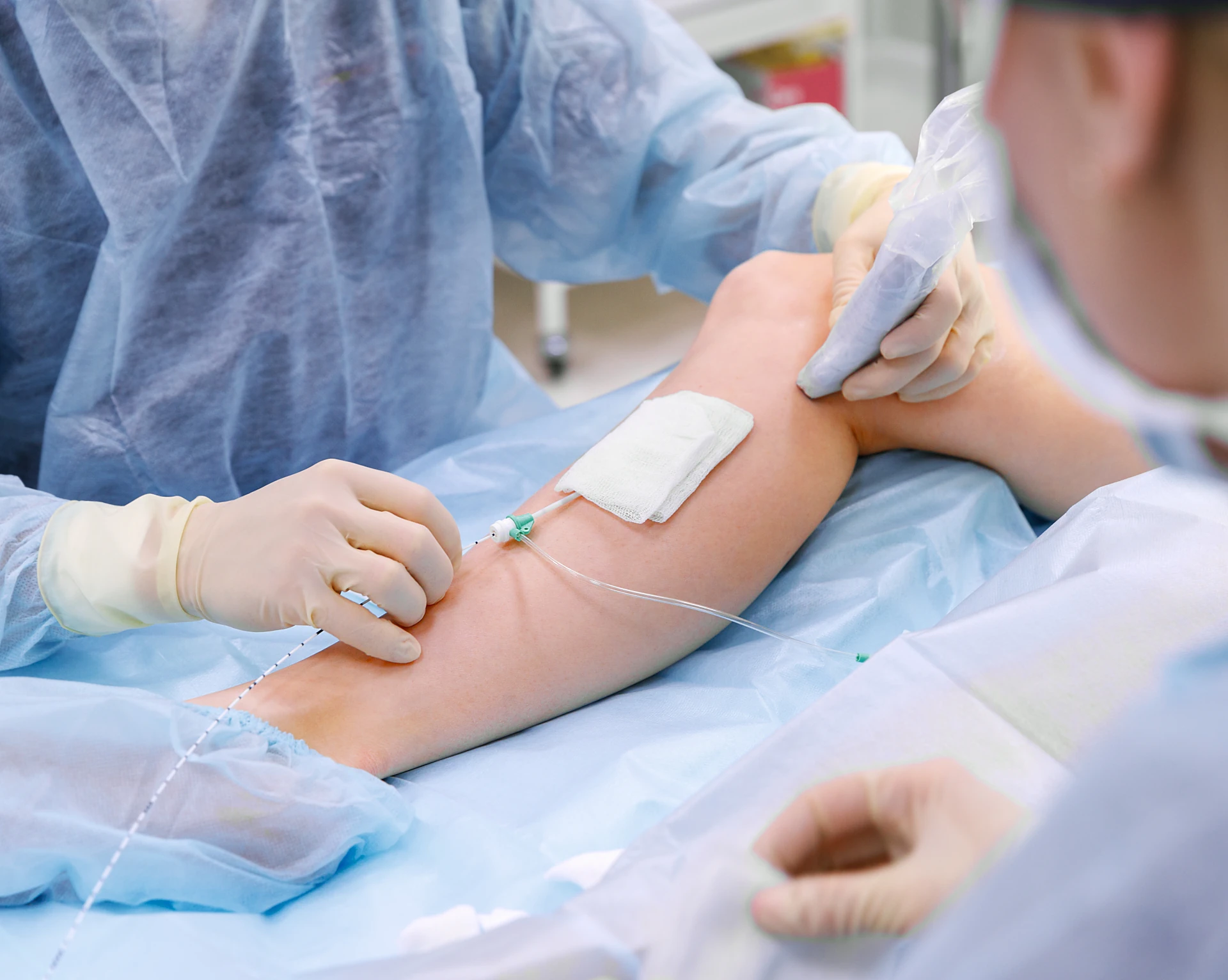
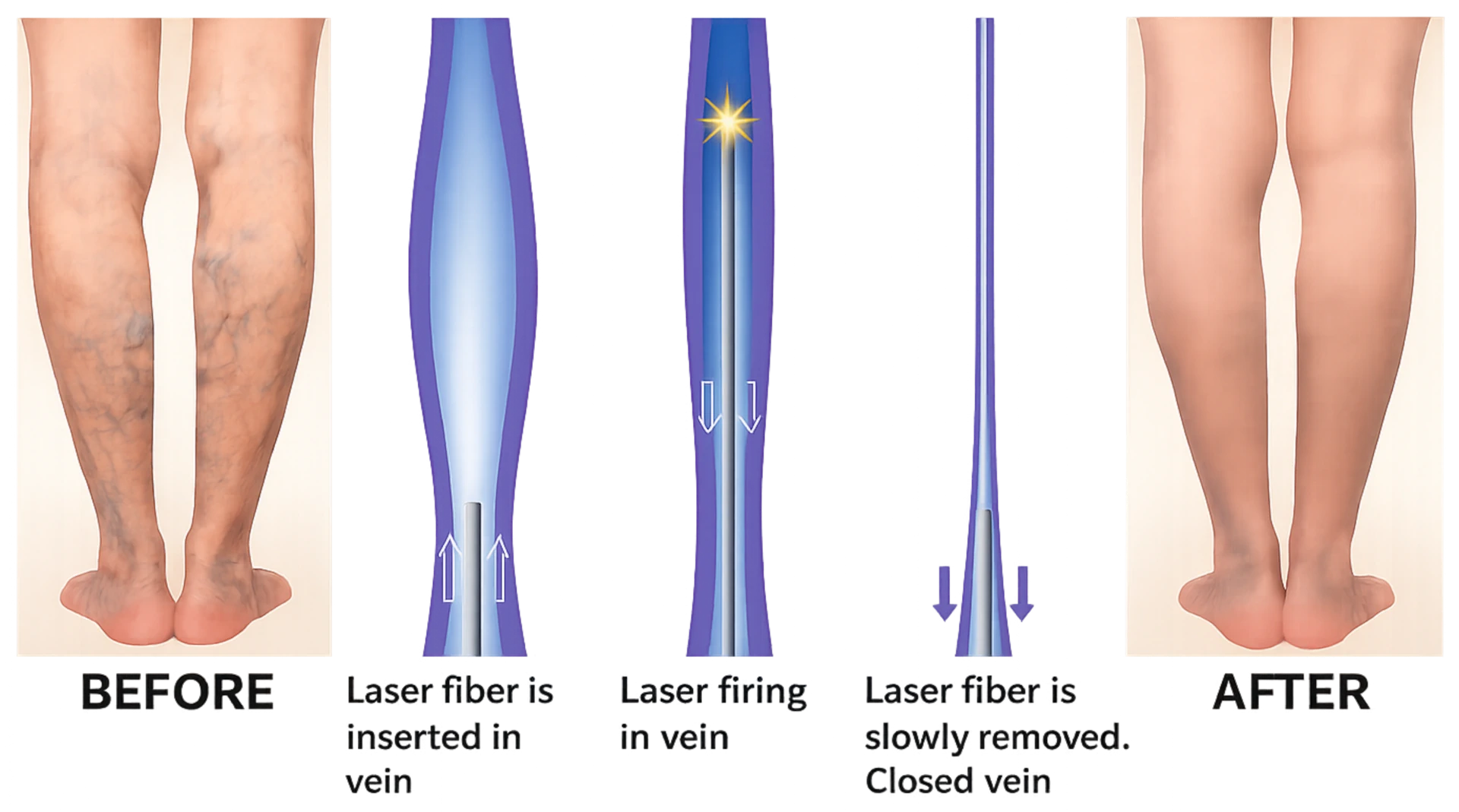
There are two main types of endovenous thermal ablations. Endovenous Laser Ablation (EVLT) and Radiofrequency Ablation (RFA). While there are subtle technical differences between the two, they are both office-based procedures around 30 minutes. Both methods have excellent procedural success and patient safety profile.
How do we decide between EVLT and RFA endovenous ablation?
This decision is typically based on the physician's preference and experience. At Denver Vein Center, Dr. Jason Le has extensive experience in both EVLT and RFA. In fact, we are one of the only vein centers in Denver that offer both options.

How is Venous Ablation Done?
1. Needle puncture and IV access into the vein
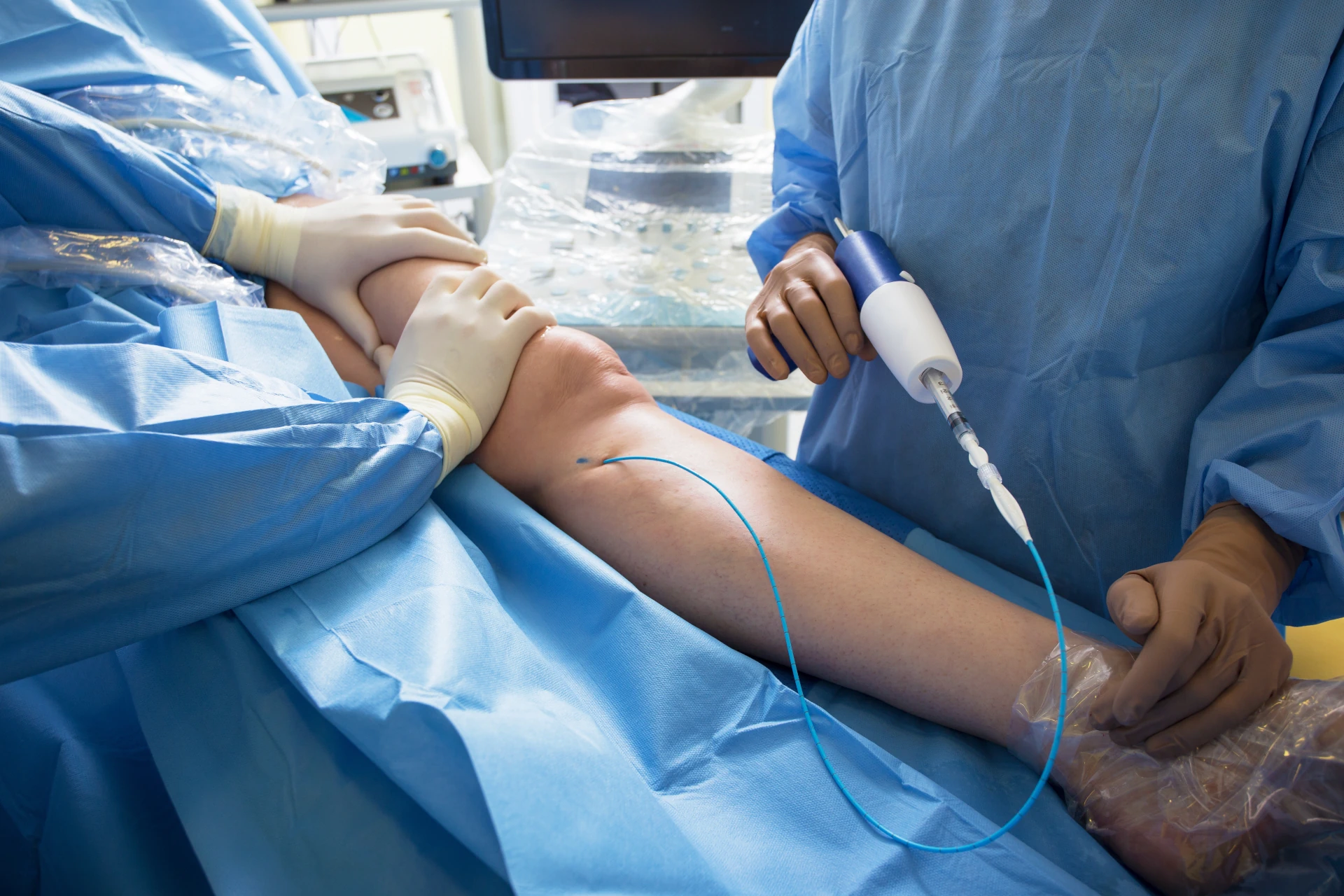
First, a small amount of local anesthetic is injected into the leg, usually below the knee. This allows the physician to place an IV into the vein.
2. Ablation catheter placement
Once the IV is in place, the physician will place the thermal catheter (laser or radiofrequency) into the vein and position it appropriately. This process is painless.
3. Injecting tumescence fluid around the vein
Next, the tissue around the vein is infiltrated with saline mixed with local anesthetic (tumescence fluid) using a needle under ultrasound guidance. This step is mildly uncomfortable but well tolerated by almost all patients. The purpose of this step is the insulate your skin and tissue from the heat energy so that the only thing getting heat treatment is the vein.
4. Activating endovenous ablation
Lastly, the thermal ablation catheter is activated, closing the target vein. This process is painless. The catheter and IV are removed from the patient.
VenaSeal

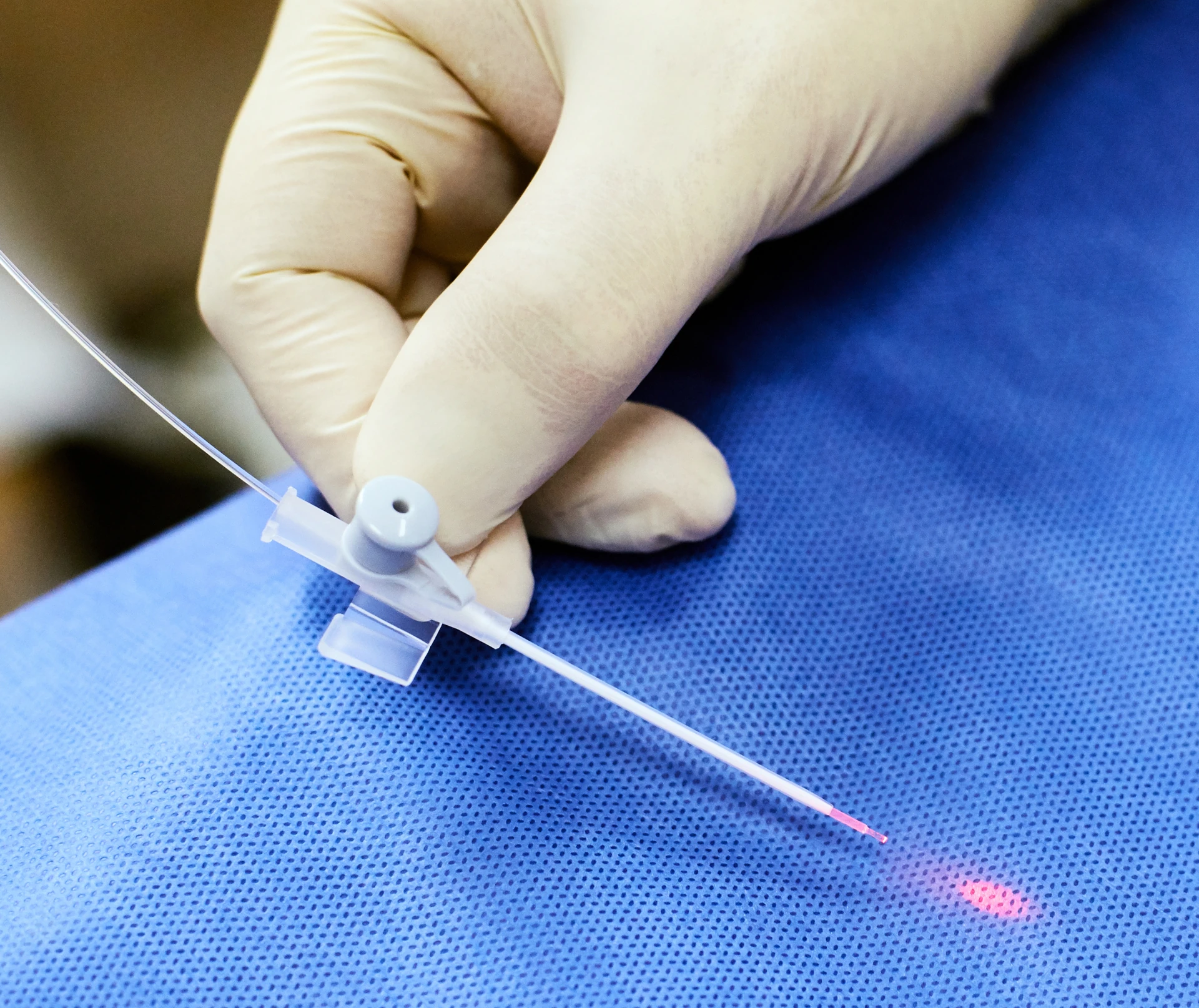
VenaSeal procedure is technically similar to that of thermal ablations except that there is no tumescence fluid injection required, making VenaSeal a nearly painless procedure. This is because VenaSeal does not generate any heat that may injure the surrounding tissue.
Since VenaSeal is a glue implant procedure, it does carry the risk of allergic reactions. Several studies demonstrate incidence around 6%, and these reactions were successfully treated with medicine. Patients with history of skin glue allergies, such as Band-Aids, surgical skin glue, or common tape should avoid this procedure. Patients with autoimmune or inflammatory disorders would also do best considering other alternatives.
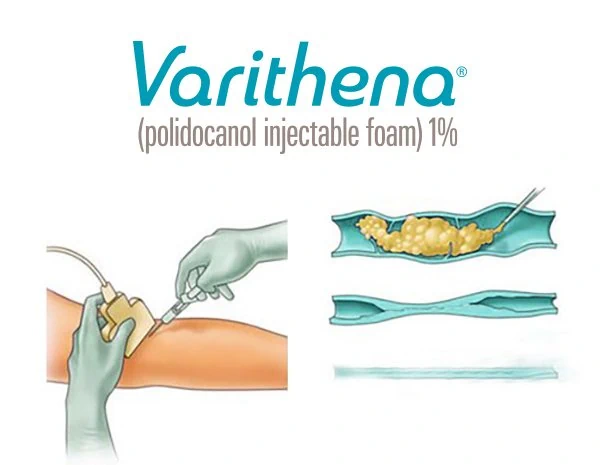
Varithena

Microphlebectomies

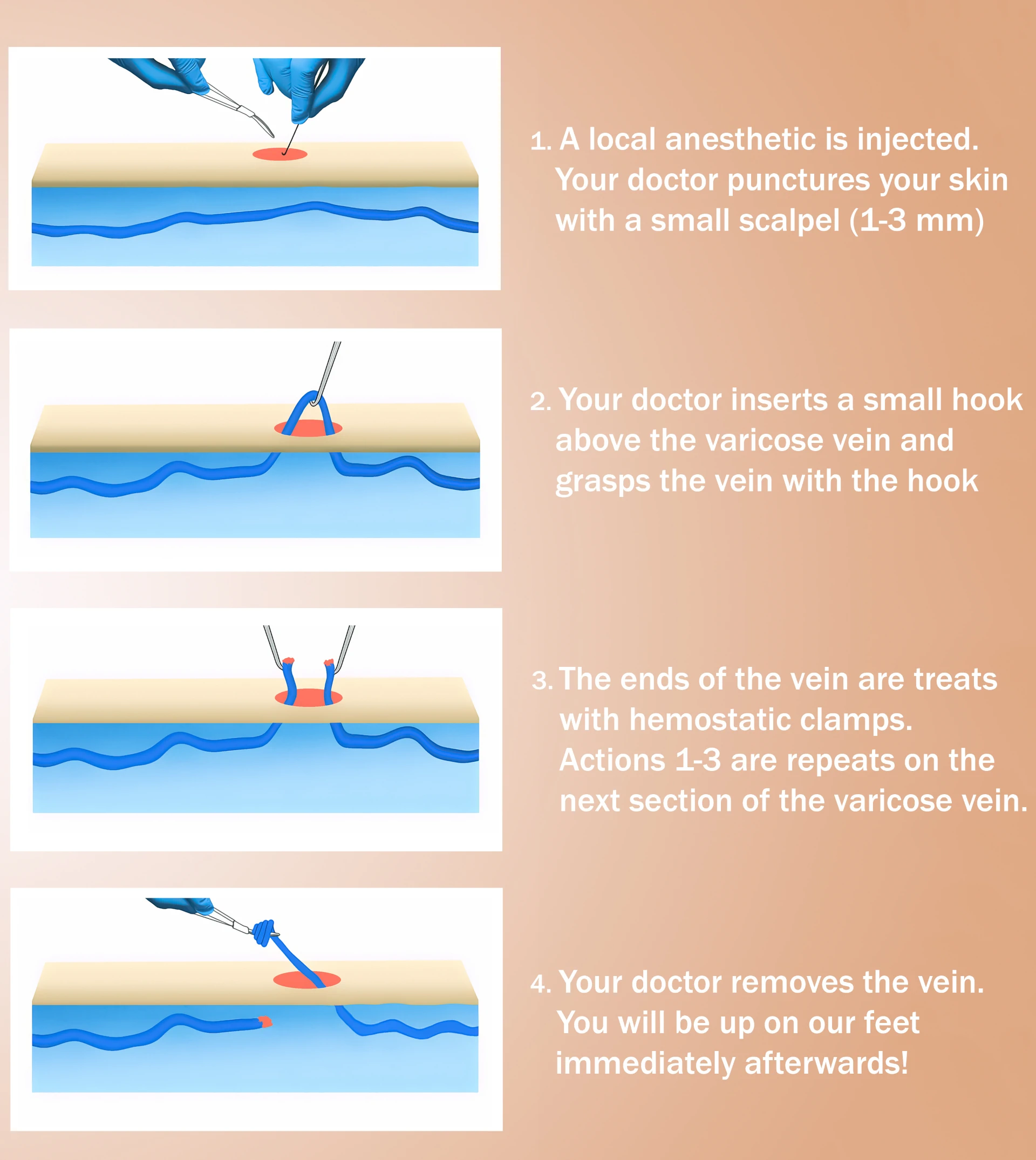
Microphlebectomies are also done in the office. The surgeon starts by numbing the skin right at the varicose veins with local anesthetics, then small, paper-cut like incisions are made in the skin. The veins are then physically removed with very fine hooks and instruments.
The advantage of microphlebectomies is immediate results. Since the veins are physically removed, there is no wait time for the varicose veins to subside. The small incisions heal quickly by day 10 and scars are nearly invisible by year 1.